How a one-week redesign unblocked a sprint and shipped a campaign tool to production
Galp Fleet Manager · 2023
UX/UI
B2B
Back Office
Context
Galp Fleet Manager is a B2B web platform that allows companies to manage their vehicle fleets: fuel cards, drivers, and consumption. Alongside the client-facing platform, there's a back office used by Galp's internal teams to manage operations.
One of those operations is campaigns — promotional offers created by Galp staff and targeted at both fleet managers and individual cardholders.
The handover
When I joined the project, the campaign creation feature was already marked as complete. Wireframes, prototype, and specifications were all in place. The team was ready to move into development.
Then the grooming session happened.
What broke down
As developers walked through the feature, the questions started stacking up. Where do campaigns appear? What gets validated and when? How do translations work across fields? What happens if a required field is skipped?
Nobody had clear answers — not the developers, not me. The existing design put everything on a single screen, with new fields appearing progressively as the user filled in the form. It looked complete. But it had no clear validation logic, no defined steps, and no way to guide a user through a complex creation flow without getting lost.
Development couldn't start.
What I changed
I started working on it immediately. Within a week, I had a revised flow ready for development, with some refinements continuing during the build.
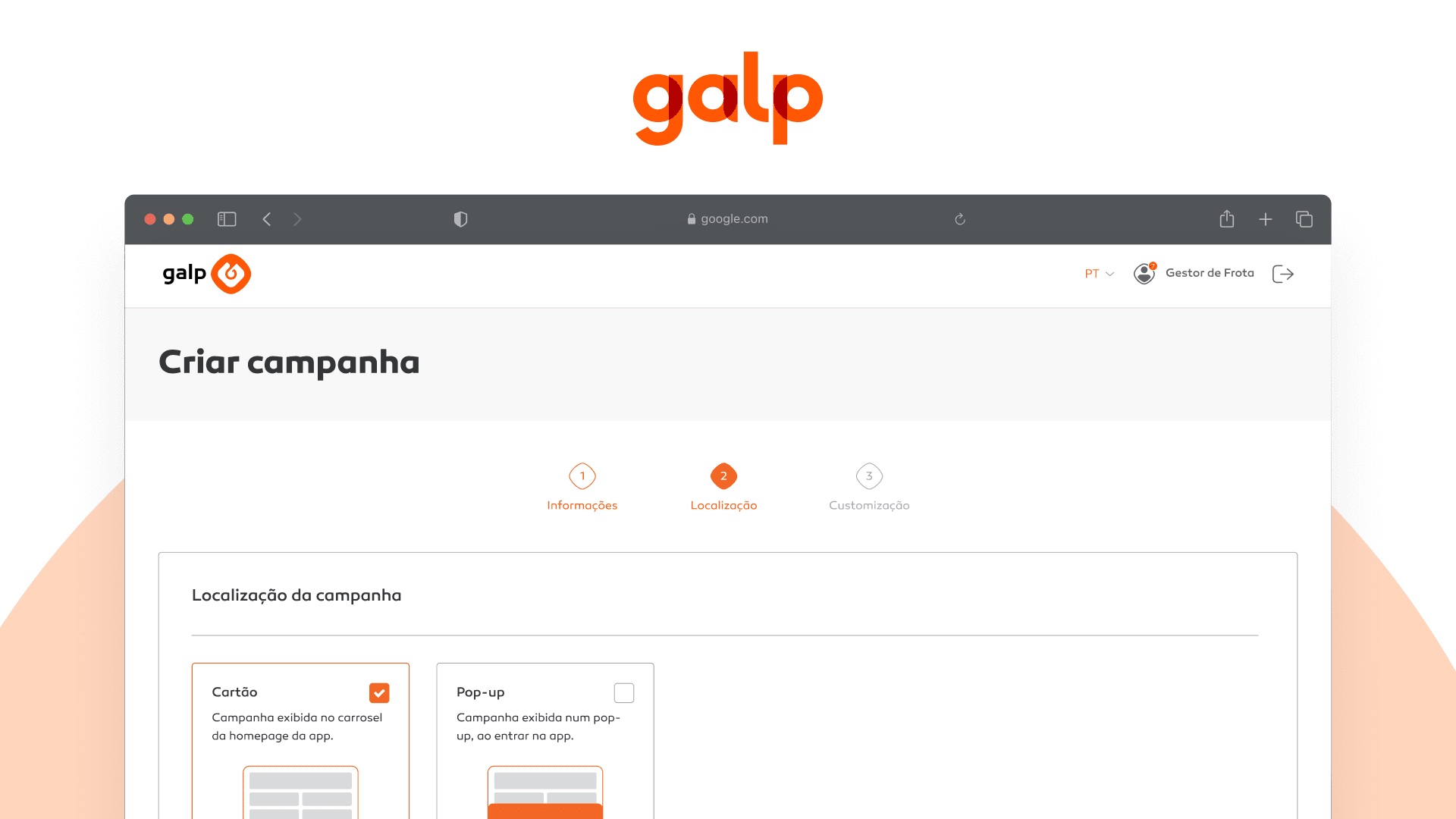
The core change: replacing the single-screen progressive form with a wizard. Instead of everything appearing on one screen, the flow was broken into discrete steps, each one focused, each one validated before moving forward.
This solved the developers' questions directly. Validations happened per step, not at the end. Translations were scoped to each screen. The campaign targets — fleet managers and cardholders — were selected early, shaping the rest of the flow. Edge cases became manageable because the logic was contained within steps rather than spread across a single surface.
The result
The feature shipped to production and was used to create campaigns during its active period. Shortly after, the product owner left the project, and a broader redesign was initiated — the current status of the campaigns feature within the new scope is unknown.